

Not long ago, I wrote a Substack essay about my biggest fear for social psychology—that the activists among us would destroy our science. My fear boils down to one thing, that activist leanings present a simple conflict of interest for science’s core mission of discovering truths. Yes we all have values that drive our choices about what to study and how to study it, and these act as biases that can also act as conflicts of interest. Activists have these, but they also have moral, political, and ideological commitments that sit on top of these and make the biases that much harder to overcome.
Worryingly, there is clear evidence that social psychology has become more political and more activist in its leaning. And if we don’t correct course, we only need to look at anthropology and increasingly sociology as examples of disciplines that have lost their way and have lost the public’s (and perhaps even undergraduate students’) trust. As the public funds the research we conduct, I would rather avoid that fate and stay relevant.

After publishing that essay—which was reprinted by the Chronicle of Higher Education—Ben Lovett reached out to me. Ben is is a professor of psychology and education at Teachers College, Columbia University, where he teaches assessment, ethics, and the history of psychology. His expertise in history and ethics matters because apparently the tension I was writing about is not new. Ben has spent years tracing the collision between two movements that have remade our field: open science, which all my readers know about, and socially responsive science, which wants activism closer to the center of science itself. His essay on the subject deserves a far wider readership than it has found, so I asked him to lay out its argument here, in his own words.
Enjoy!
In October 2024, the New York Times ran a remarkable story. A researcher was delaying publication of results from a study of the effects of gender-affirming care on the mental health of trans youth, because the findings failed to show benefits. She pointed out that the results would likely be used by opponents of gender-affirming care. Her concerns seemed well-founded, particularly after Donald Trump was re-elected just a couple weeks later. But her decision was nonetheless troubling, and it seemed to highlight the tension between two recent trends in psychology. First, the standards for research have risen. The open science movement has promoted pre-registered studies, larger sample sizes, transparency in the reporting of results, and more. Second, diversity, equity, and inclusion (DEI) initiatives have proliferated, promoting psychologists’ greater involvement in activism, both within the profession and in the wider world, with a goal of a truly socially responsive science.
Tension between science and social advocacy has been around for a long time in psychology. As a professor, I teach about that tension in my history of psychology course. In addition, most of my other courses are about psychological assessment—an applied topic that has been associated with many social and political controversies over the years. Like me, my students are generally in psychology to try to help people, and often, doing and using the highest-quality science is the best way to do that. But there are other times when scientific goals seem to conflict with activist intentions, and in the past decade, those conflicts have become harder to ignore.
Viewing the open science and DEI movements in psychology as a cultural anthropologist might, some similarities are striking. Both movements proposed new norms for scholars—norms that were promoted by charismatic figures on social media. Credit systems were created to award researchers with “badges” for open science practices and to rate journals with a score on a “diversity accountability index.” Major professional associations got behind both movements, with leaders issuing statements apologizing for their predecessors’ behavior and pledging to do better. Guides to very specific approved language were issued. And many prominent scholars took pains to show their support for both movements publicly.
Not only was the form of the two movements similar; there was also some conceptual overlap. Both movements accused the field of psychology of harboring biases (either confirmation biases, or prejudice against marginalized groups) that were doing considerable harm to people and that were also making psychological research less accurate. In essence, both groups of reformers were aiming to make psychology better. And as both movements proceeded, proponents claimed that practices which helped one movement would help the other as well. At the same time, areas of conflict have been minimized or ignored entirely.
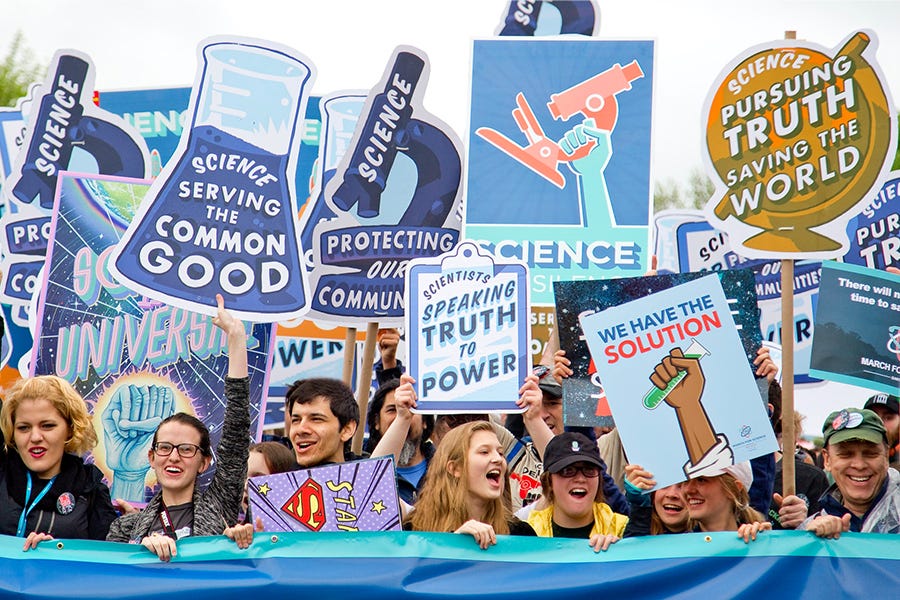
One tension is that high-quality research can inadvertently hurt efforts toward social change. After the replication crisis, some of the work that came under the greatest scrutiny was research being leveraged to call for social policy changes. As research on topics such as stereotype threat and implicit bias were found to have problems, the scholars who had been citing that work in support of policy changes didn’t change their policy views, but simply kept citing the old, now-discredited findings, or else just made the empirical claims without any citations. In 2021, APA passed a resolution on ways that psychology could combat racism, and called for implicit bias training, despite having just recently published a meta-analysis finding such training to be useless at changing real-world behavior. Meanwhile, journal editors warned authors against submitting studies that might be construed as conveying harmful messages about marginalized groups; it was as if researchers were being told to find the right results or else stuff the data in their file drawers.
A second area of tension stems from the fact that open science’s reforms raise methodological standards for all researchers. Socially responsive science advocates have argued cogently that these reforms can have a disparate impact on the work of scholars from marginalized groups, or on work that is designed to foment social change. Some of these advocates also worry about enhanced “interrogations” about the objectivity of their work, which is often qualitative and small-sample by design. Rather than promoting universal reforms, socially responsive science advocates tend to propose interventions that compensate for existing biases in a particular direction. This might lead to policies where all special issues of a journal must address social justice, or where journals create positions just for scholars from marginalized groups. But the justifications for these reforms—that is, the existing biases being corrected for—are often simply assumed, and empirical work failing to find such biases is unwelcome.
A final area of tension between the two movements has to do with the place of researchers’ personal, lived experiences. Open science draws from positivist traditions that view scientific data as being observable to any trained scientist. Claims are subject to public scrutiny and to the “organized skepticism” that sociologist Robert Merton viewed as a hallmark of science. In contrast, many advocates of socially responsive science view positivism as a limiting framework, and emphasize the value of the personal backgrounds and intuitions of scientists. Standing traditional ideas of objectivity on their head, these advocates argue that it is essential to consider the personal standpoint that a particular scientist approaches their work from. Claims derived from that standpoint are thought to deserve respect and attention, and it is rude to contradict someone’s lived experience.
In a recent essay, I explored these tensions in much greater detail, and provided some thoughts on ways forward, but any way forward needs to start by acknowledging the tensions. Unfortunately, the popularity of both movements makes that difficult. Psychologists are loathe to speak against either open science or DEI, and reasonably so. Who would be against transparency in research? Similarly, who would be against inclusiveness in their profession?
Interestingly, things were not so different over 80 years ago, when the Society for the Psychological Study of Social Issues (SPSSI) surveyed its members about whether the organization should offer opinions on “controversial social issues.” Generally, the same members were in favor of both high-quality objective science and progressive political advocacy. The SPSSI chairman, James J. Gibson, observed that:
The most general feeling was that a paradox is involved in the opposition of objectivity to progressive partisanship which needs to be resolved. Upholders of scientific detachment do not like to be classed as conservatives and equally the progressives do not like to be classed as lacking in objectivity.
If the reluctance to acknowledge tensions can be overcome, trade-offs can be laid out more clearly. This has already happened with some open science reforms. Once the epistemic costs of some socially responsive measures can be similarly discussed, psychologists can decide if those costs are justified. For instance, if there are some scientific questions where we are not open to hearing certain answers, any research inquiries will be hopelessly compromised, and our time is best spent elsewhere. Perhaps those questions should be explicitly designated as being off-limits, like certain experiments in virology or nuclear physics, and psychologists should not claim to be basing their opinions regarding these topics on scientific inquiry. Similarly, if a researcher’s positionality is truly relevant to judging the researcher’s work, the key elements of positionality should be identified, with clear empirical justification, and those elements should be reported in a standardized fashion when a manuscript is submitted, with journals providing an explicit notice of how the positionality information will be used during the review process. At the very least, proposals that include these details can prompt a productive conversation about when, if ever, it is desirable to block the way of scientific inquiry and dissemination. At a moment of declining public trust and significant political threat to our work, such a conversation has perhaps never been more necessary.
Ben Lovett is Professor of Psychology and Education at Teachers College, Columbia University, where he teaches classes in psychological assessment, law and ethics for school psychologists, and the history of psychology. Last year, his essay Open Science and Socially Responsive Science: Conflicting Movements in Psychology was published by Springer.
Ben's essay sounds great! I'll definitely need to find time to read it. I am given comfort that the current moment in the psychology movement isn't unique: it means we might have a chance to resolve it, especially since the issues discussed are not at all unique to psychology as a field.
I am surprised that the idea of *explicitly* making certain questions off-limits has never occurred to me. This is likely because liberalism encourages us to tolerate experiments that, say, don't explicitly disregard the moral law. But this is likely survivorship bias: not engaging in cruel human experiments, for example, is obvious to me in part because of how much it's drilled into all of us after the many mistakes the scientific community made in the last century.
If I were to go a bit further than Ben does here, I would say that, for certain questions, we should just cut out the middle man: our society has come to over-rely on science to justify policy positions which are really in the domain of metaphysics. Just because a policy proposal has a weak measurable effect does not mean it isn't the right thing to do or a waste of resources. Furthermore, basing important decisions on psych research kinda implies the research is *good*. Given how much the field has struggled these past few decades, that seems like quite the wild assumption! Of course, as C. Thi Nguyen might put it, everyone in politics relies on data because they speak across ideological and cultural differences, and opinions usually don't. Given that the open movement more than anything else values honesty, we ought to be more honest with ourselves about the limitations of our persuasive methods, and sometimes just have faith that people on the other side of the aisle will get what we're tryna do.
The article you linked on Anthropology is paywalled. Why has public trust been lost? The public typically has little to no idea of what goes on in academic fields, which is an independent problem. In any case, Anthropology is a pretty strong field and has contributed some great insights recently. That's not any kind of general representation though, but I tend to think really good, durable work is uncommon in most fields.
I find Ben's post to be good, but seems to hold a very mainstream/institutional definition of both open science and social justice, which obviously affects the analysis and discussion. These are dominant forces, so it makes sense in that regard. All sorts of movements that begin in various outsider or radical groups tend to be co-opted by institutions, sometimes with good intentions but often little commitment, or sometimes because of their utility in symbolism. There's nothing about first principles open science or various equality/anti-oppression movements that are at odds. Nothing stated in the piece persuades me this isn't true, except at the level that's emerged in the mainstream. And, it seems important that people who don't know, should understand that real open science involves sharing everything done in research with everyone who is interested, and is not at odds with movements that aspire to all people being valued equally as humans. I will distinguish this position from the institutionalised science that takes place in our current liberal technocracy. That shit is threatened by all sorts of things long-term, and participants who domesticate one of these two movements for their own career ends will find conflict with the other. I suppose that's what Ben's piece is saying, just without acknowledging it.
Oh yeah. I get some sense of what you speak to in your first paragraph WRT activists. I'm assuming you mean aggressive progressives who are trying to impose change on mainstream institutions. Is that fair to say? I don't think they (or any person or group) have ideological, political or moral commitments of a special or unique status. They just conflict with the mainstream position, who hold power and whose actions are typically considered justifiable, whether violent or otherwise coercive. As they say, everything is political, which is particularly relevant when considering mainstream acts on a political level. I don't hold the same commitments btw, but I don't consider theirs special, or the mainstreams. That doesn't mean it's easy for these commitments to change. It's very possible for people to paint themselves into a corner in life, especially in this uncaring society.
No hate here by the way. Just critique. Obviously my background is quite different.